Updated by |
on 11/07/2021 |
Panzergrenadier Cover Story: Where is Lindenberg now?
Created by |
on 11/07/2021 |

SS KG Peiper |
38(t) Recon Tank in Hungary/Czech |
17 February 1945 in the afternoon, Blumberg (Morzyca in Poland at present), a battle group from the 10. SS-Panzerdivision "Frundsberg" with II. Bataillon(Panzer IV tank)/SS-Panzer Regiment 10, SS-Panzer Aufklärungs Abteilung 10 and SS-Panzergrenadier Regiment 22 crossed the River Ihna and launched attack over Müscherin (Moskorzyn in Poland at present), Schöningsthal (Szemielino in Poland at present) and Sallentin (Żalęcino in Poland at present). After hard fighting the battle group took these villages and enlarged the Blumberg bridgehead for the next move to Lübtwo (Lubiatowo in Poland at present) and Klemmen (Kłęby in Poland at present) to close the gap. The SS-Obersturmführer Franz Riedel, commander of the 7. Kompanie/II. Bataillon/SS-Panzer Regiment 10, led his Panzer IV tank at the front and destroyed 13 Russian T34 tanks (possible belonged to Russian 49th Guards Tank Brigade) (1).17 February 1945, Dölitz , the 4. SS-Polizei-Panzergrenadier-Division was emboiled in heavy fighting from his left flank (right flank was 10. SS-Panzerdivision "Frundsberg" in Blumberg) because his left flank attack (provided from 11. SS-Freiwilligen-Panzergrenadier-Division "Nordland") failed to take Petznick (Piasecznik in Poland at present) (2). |
It happened here: Blumberg to Sallentin, the possible attack route of the 10. SS-Panzerdivision "Frundsberg" |
It happened here: Dölitz and Petznick |
17 February 1945, Lindenberg, SS-Obersturmführer Jacques Capelle (aged 31) had 170 men at the strategic ridge. The Russian tanks responded rapidly and swiftly. Within several hours the passage toward Lindenberg was no longer safe under Russian fires. SS-Obersturmbannführer Léon Degrelle (aged 39) had no heavy weapons except two armoured Flak trains under his command but they also could not prevent the inevitable sacrifice (3, 4). The Russian tanks kept firing on the position on Lindenberg but also kept a distance to prevent returned fire from German hand held anti-tank rocket Panzerfaust. SS-Obersturmführer Jacques Capelle (aged 31) remained calm and radioed the situation every 15 minutes. He received order to stay on the ridge for 24 hours to wait for the closing gap in the south flank (10. SS-Panzerdivision "Frundsberg"). Two Russian tanks were destroyed by them but other Russian tanks overran some of their positions. In the afternoon SS-Obersturmführer Jacques Capelle (aged 31) had only 70 men left at the strategic ridge. The Russian kept firing and took their positions one by one. At 3PM all the fighting ceased before SS-Obersturmführer Jacques Capelle (aged 31) could radio his last message and he fought to the last bullet at his command post. Only four wounded Wallonien Grenadiers escaped the slaughter but only two of them survived to reach German lines (3). |
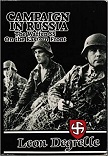
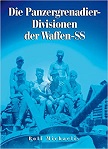
Reference:1. Stenger, Dieter. Panzers East and West: The German 10th SS Panzer Division from the Eastern Front to Normandy, Chapter 8. Mechanicsburg, PA: Stackpole Books, 2017.2. Michaelis, Rolf. Die Panzergrenadier-Divisionen der Waffen-SS, p55. Eggolsheim: Dörfler Verlag, 2011.3. Degrelle, Léon. Campaign in Russia: The Waffen SS on the Eastern Front, p289. Institute for Historical Review, 1985. In the book Degrelle mentioned that Stalin tanks were responsible for the attack on Lindenberg. Could it be possible? The sector was held by Russian 12th Guards Tank Corps. According to Dr. Niehorster's website, the only troop had Stalin tanks was the 79th Guards Heavy Tank Regiment in the 12th Guards Tank Corps. But the Russian 66th Guards Tank Brigade (T34/85 tanks) was most closed to the area around Lindenberg. |
 |
 |
 |
 |
 |
 |


Member of |
|

Buy Books from |
 |
Copyright 2021 Dr.Chuang, Taipei, Taiwan |
Associated with |
|
