Updated by |
on 18/07/2021 |
Panzergrenadier Cover Story: Where is Lindenberg now?
Created by |
on 16/2/2020 |

SS KG Peiper |
38(t) Recon Tank in Hungary/Czech |
16 January 1945, Berlin, the Führer Adolf Hitler (aged 56) retunred from the Vosges and finally decided the Western Front must go over to defensive and transferred troops to the East Front. The chief of staff, Generaloberst Heinz Guderian (aged 57), had prepared a plan to use these troops from the Western Front to flank the Russian's offensive toward River Oder since 12 January 1945. However, the Führer had decided the 6. (SS) Panzer Armee (6th SS Panzer Army) to Hungary thus the plan to flank the Russian's offensive from north and south proposed by Generaloberst Heinz Guderian (aged 57) was in vain (1).22 January 1945, Berlin, Generaloberst Heinz Guderian (aged 57) requested a new Heeresgruppe (Army Group) to be formed in order to stop the gap between Heeresgruppe Mitte (Army Group Centre, later redesigned to Heeresgruppe Nord (Army Group North) on 25 January 1945) and Heeresgrupp A (Army Group A, later redesigned to Heeresgruppe Mitte (Army Group Centre) on 25 January 1945) and proposed Generalfeldmarschall Maximilian von Weichs (aged 64) as commander-in-chief to the Führer. Generaloberst Heinz Guderian (aged 57) still prepared the plan to use the new Heeresgruppe to flank the Russian's offensive from north and proposed the man he trusted. However, the Führer had decided Reichsführer SS Heinrich Himmler (aged 45) as the man he trusted to be commander-in-chief of the new Heeresgruppe Weichsel (Army Group Vistula) (2).24 January 1945, Deutsch-Krone (Wałcz in Poland at present), Reichsführer SS Heinrich Himmler (aged 45) set up his Heeresgruppe Weichsel (Army Group Vistula) HQ on his personal train, the Steiermark. In theory he controlled 2. Armee (2nd Army) which was released from Heeresgruppe Mitte (Army Group Centre, later redesigned to Heeresgruppe Nord (Army Group North) on 25 January 1945) and 9. Armee (9th Army) which was released from Heeresgrupp A (Army Group A, later redesigned to Heeresgruppe Mitte (Army Group Centre) on 25 January 1945). In fact the HQ lack the radio to connect to military network and also lack the adequate staff personnel to run. Finally the operations officer Oberst Hans Georg Eismann (aged 36) reported to the HQ on 26 January 1945 and Chief-of-Staff SS-Brigadeführer und Generalmajor der Waffen-SS Heinz Lammerding (aged 40) reached the HQ on 27 January 1945 (2).26 January 1945, Pommerania, the new 11. Armee (or SS Panzer-Armeeoberkommando 11 or 11th SS Panzer Army) was formed from staff of Oberkommando Oberrhein of the Waffen-SS as a striking force of Heeresgruppe Weichsel (Army Group Vistula) between the 2. Armee (2nd Army) in Prussia and the 9. Armee (9th Army) in lower River Oder (3). 28 January 1945, SS-Obergruppenführer Felix Steiner (aged 49) was named commander-in-chief of 11. Armee (or SS Panzer-Armeeoberkommando 11 or 11th SS Panzer Army) and the core of the new army, in no doubt, was the III. (germanisches) SS-Panzerkorps.5 February 1945, Pommerania, the 11. Armee (or SS Panzer-Armeeoberkommando 11 or 11th SS Panzer Army) had assembled the following troops (3). |
13 February 1945, Berlin, the chief of staff, Generaloberst Heinz Guderian (aged 57) insisted the 11. Armee (or SS Panzer-Armeeoberkommando 11 or 11th SS Panzer Army) lauched the attack toward the Russians northern flank in lower River Oder on 15 February 1945 before the Russians were too strong and he also insisted the whole operation was supervised under his personal assistant Generalleutnant Walther Wenck (aged 45). After several hours bitter conference the Führer finally gave way and agreed with Generaloberst Heinz Guderian (aged 57). The impending operation was codenamed Unternehmen Sonnenwende (Operation Solstice) (4). |
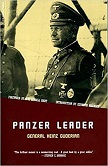
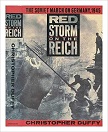
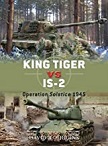
Reference:1. Guderian, Heinz. Panzer Leader, p221. Boston, MA: Da Capo Press, 2001.2. Duffy, Christopher. Red Storm on the Reich: The Soviet March on Germany, 1945, p177. New York City, NY: Atheneum Books3. Tessin, Georg. Verbände und Truppen der deutschen Wehrmacht und Waffen-SS im Zwiten Weltkrieg 1939-1945 Dritter Band: Die Landstreitkräfte 6-14, p194. Osnabrück: Biblo Verlag, 1973.4. Higgins, David. King Tiger vs IS-2: Operation Solstice 1945, p40. Oxford, UK: Osprey Publishing. |
 |
 |
 |
 |
 |
 |


Member of |
|

Buy Books from |
 |
Copyright 2020-2021 Dr.Chuang, Taipei, Taiwan |
Associated with |
|
